




You May Be Able to Challenge Scientific Evidence in a First Offense DWI
 Many people arrested for a
first offense DWI
mistakenly believe when scientific
testing has occurred that it will be
difficult or impossible to get an
acquittal. The reality is those who
conduct the tests are not infallible and
mistakes happen regularly. If you can
successfully get a jury to have any
reasonable doubt about the quality of
toxicology testing or blood alcohol
concentration (BAC) testing, you may be
able to avoid a guilty verdict.
Many people arrested for a
first offense DWI
mistakenly believe when scientific
testing has occurred that it will be
difficult or impossible to get an
acquittal. The reality is those who
conduct the tests are not infallible and
mistakes happen regularly. If you can
successfully get a jury to have any
reasonable doubt about the quality of
toxicology testing or blood alcohol
concentration (BAC) testing, you may be
able to avoid a guilty verdict.
Challenging Scientific Evidence in a First Offense DWI Case
Recently, evidence of problems with the work performed by one Texas official illustrated how unreliable scientific testing can sometimes be in DWI cases. ABC 13 reported dozens of DWI cases are at risk because of the poor work performed by the DWI breath test technical supervisor at one Texas police department.
The DWI breath test supervisor was responsible for overseeing all tests conducted on breath test machines, including the Intoxilyzer 5000. When breath test results were introduced in drunk driving cases, her technical expertise was highlighted by the prosecuting attorney and she often appeared in court to provide testimony. Unfortunately, many DUI defense attorneys began to notice serious problems with her work, though it was difficult to pinpoint exactly what the issues were or prove what errors she was making.
An internal investigation has now demonstrated her expertise was virtually non-existent and the “science” behind her supervision of breath tests was nothing more than junk science. The internal investigation into her work resulted in her termination because of a wide variety of performance issues.
ABC 13 obtained documents from the Internal Affairs investigation, in which one of her supervisors noted her work was so poorly done it was a “ticking time bomb.” Because many different departments contracted with her PD for its breath alcohol work, the internal affairs documents indicated the substandard quality of her work “could jeopardize nine police agencies in four different counties” and could “jeopardize the integrity of the entire program.” The department became aware of her performance issues at least as far back as 2014, and she was suspended at least once in 2015, but remained in her supervisory role until recently.
The fact she was able to continue working for two years despite known issues with her job performance illustrates there are lapses in the system designed to ensure the accuracy of breath tests. If a breath test or other chemical test is to be used against a drunk driving defendant, it needs to be 100 percent accurate and the process should be supervised by someone with actual credentials and experience. Whenever test results fall short of providing sufficient proof beyond a reasonable doubt of a defendant's guilt in a DWI case, the defendant who has been accused of drunk driving based on a high BAC test should be acquitted of the charges.
 Recently, a man in Texas was sentenced
to life in prison after his ninth DWI
charge. This was the man's fifth
trip to jail after being convicted of
driving while impaired. In the most
recent instance, he was involved in a
collision and hit another car almost
head-on. He ran to a nearby convenience
store and asked a clerk to try to hide
him, but was unsuccessful in evading
police and faced charges. The judge
indicated he did not believe the man
could be rehabilitated, according to
Recently, a man in Texas was sentenced
to life in prison after his ninth DWI
charge. This was the man's fifth
trip to jail after being convicted of
driving while impaired. In the most
recent instance, he was involved in a
collision and hit another car almost
head-on. He ran to a nearby convenience
store and asked a clerk to try to hide
him, but was unsuccessful in evading
police and faced charges. The judge
indicated he did not believe the man
could be rehabilitated, according to
 KXAN
KXAN A DWI arrest in Texas could result in
an administrative
A DWI arrest in Texas could result in
an administrative
 Teen drunk driving has declined
dramatically since 1991. According
to
Teen drunk driving has declined
dramatically since 1991. According
to 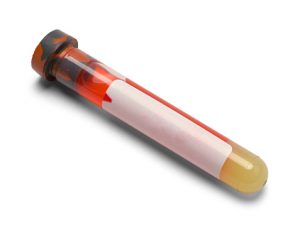 Many defendants who are arrested for
impaired driving undergo testing of
their blood, breath, or urine in order
to determine the level of drugs or
alcohol in their system. Prosecutors use
toxicology tests and lab reports to show
a defendant was too impaired to drive.
Defendants who know there are lab
results indicating impairment may feel
as if this evidence is sufficient for a
prosecutor to meet the burden of proof,
demonstrate guilt beyond a reasonable
doubt, and secure a conviction.
Many defendants who are arrested for
impaired driving undergo testing of
their blood, breath, or urine in order
to determine the level of drugs or
alcohol in their system. Prosecutors use
toxicology tests and lab reports to show
a defendant was too impaired to drive.
Defendants who know there are lab
results indicating impairment may feel
as if this evidence is sufficient for a
prosecutor to meet the burden of proof,
demonstrate guilt beyond a reasonable
doubt, and secure a conviction.
 Police, prosecutors, and lawmakers
have routinely passed strict laws
against drunk driving and have sometimes
engaged in tactics to enforce DWI laws
which abridge defendants' rights.
Police, prosecutors, and lawmakers
have routinely passed strict laws
against drunk driving and have sometimes
engaged in tactics to enforce DWI laws
which abridge defendants' rights.
 In 2013, there was a decline in the
number of impaired driving arrests in
Houston over Thanksgiving weekend.
In 2013, there was a decline in the
number of impaired driving arrests in
Houston over Thanksgiving weekend.
 Football and alcohol-use seem to go
hand-in-hand, both for players and fans.
According to
Football and alcohol-use seem to go
hand-in-hand, both for players and fans.
According to